
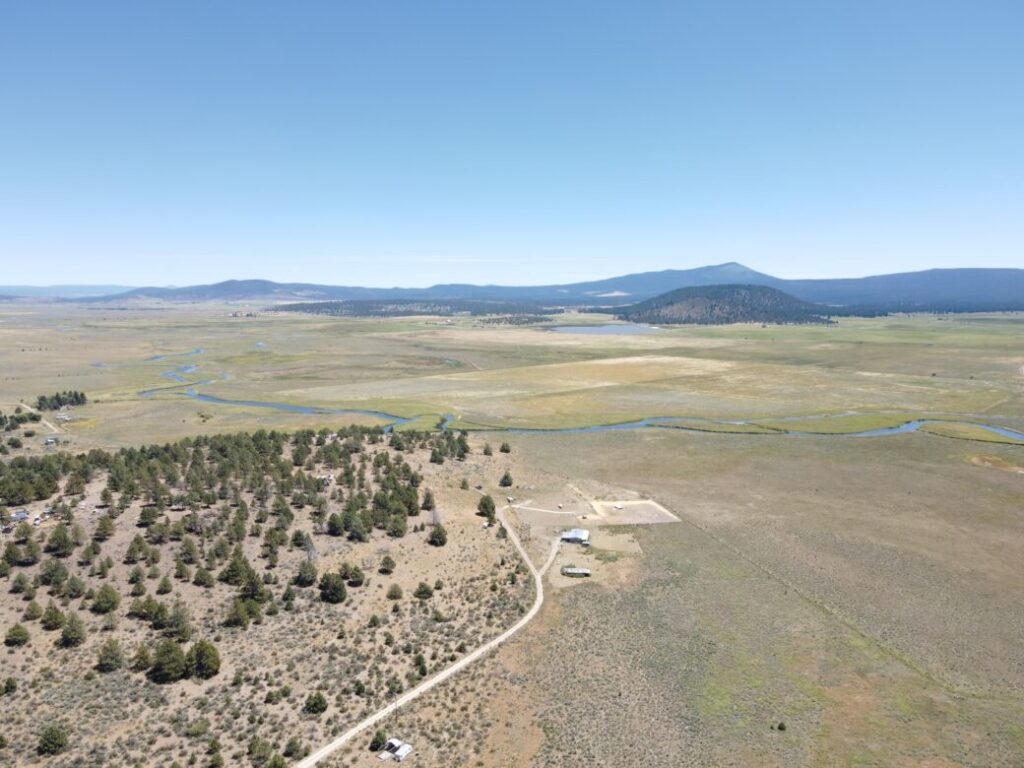
Klamath County has always had some of Oregon’s best fishing — it holds the upper basins of two rich river systems and grows native redband rainbow trout to sizes most anglers only see in magazines. But something happened here recently that makes this corner of Oregon genuinely historic water.
The salmon came back. In 2024, the four dams on the Klamath River came out — the largest dam removal in American history — and within weeks, Chinook salmon were documented in the upper basin for the first time in more than a century. By that fall they had pushed into the Williamson and Sprague rivers, water that had not seen a salmon since before your great-grandparents were born. More than 400 miles of habitat reopened, and the fish found it almost immediately.
You are not going to book a salmon trip here yet — the runs are rebuilding, not harvestable — but you can fish trophy trout water while one of the great river recoveries in American history happens around you. Here is the beginner’s map.
What is on this page
Read this first: the 2026 trout rules
The same native redbands that make this basin famous had record-low spawning counts over the 2025–26 winter, and Oregon responded. As of 2026, Upper Klamath Lake and its spring-fed tributaries are catch-and-release only for redband trout, with flies and artificial lures only (no bait), from June 15 through October 31 — in line with the rules already protecting the Wood and Williamson rivers and Agency Lake. On the Keno reach of the Klamath River the limit is one redband between 12 and 15 inches, no bait. Regulations here are moving as the basin recovers, so check the current ODFW Southeast Zone report before every trip.
Upper Klamath Lake
This is the water that made the county’s reputation. Upper Klamath Lake grows some of the largest native redband rainbow trout in the world — hooking a 10 or 12 pounder is a real possibility, and fish over 20 pounds have come out of this lake. A huge, shallow, food-rich lake with cold spring inflows is simply a trout factory.
These days you are releasing every redband you touch (see the rules above), and honestly, that is the right trade: you get to fight the fish of your life, and the fishery gets to rebuild. If you want a fish fry, the lake’s yellow perch and bullhead catfish are abundant, open, and excellent over a campfire — especially up toward Agency Lake near Chiloquin.
Lake of the Woods
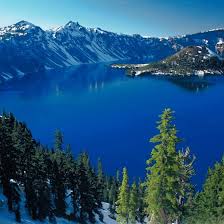
This 1,100-acre mountain lake is the family all-rounder: rainbow, brown and brook trout, kokanee salmon, yellow perch, largemouth bass, catfish and crawdads, with campgrounds and a resort on the shore. Trolling is the local habit, fly anglers do fine, and in winter it is regularly ranked among Oregon’s best ice fishing lakes — a genuine four-season fishery. A few protected bull trout live here too; if you catch one by accident, it goes back unharmed.
Odell Lake
Up in the county’s forested northern corner, Odell is one of Oregon’s top-tier fisheries — five miles long, more than 300 feet deep in places, and loaded with kokanee plus the big lake trout that eat them. Native rainbows cruise the edges, and whitefish in the shallows are a kids-from-shore favorite. Bull trout live here as well, which is why a few spots near the tributary creeks carry special closures — read the signs and the regs before you set up.
The rivers: Williamson, Sprague & Wood
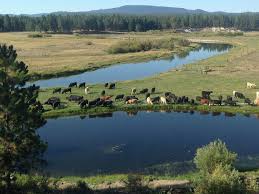
The Williamson is the famous one — a spring creek of national reputation where lake-run redbands the size of steelhead move up out of Upper Klamath Lake. The Sprague, its 75-mile tributary, is browns, redbands and even largemouth bass through big meadow country, best in late spring and early summer. These two are also where the returning Chinook were first documented in Oregon — when you fish here now, you are fishing recovering salmon water.
The Wood River at Fort Klamath is the quiet step back in time: slow, clear, ice-cold spring water winding between cut banks and grassy turns, holding resident browns and spawning runs of big redbands. It is dry-fly water of the classic kind, and it is protected accordingly — all three of these rivers carry conservation rules for redbands, so rig with the current regulations in hand.
The Klamath River, after the dams
If you read the old version of this article, it described the stretch “between Keno Dam and J.C. Boyle Reservoir.” J.C. Boyle is gone. The dam and its reservoir came out with the 2024 removal, and the Klamath now runs free from Keno all the way into California — that is what reopened the basin to salmon.
What remains for the trout angler is the Keno reach below Keno Dam: a steep, powerful canyon stretch where the resident redbands run bigger than many rivers’ steelhead. It carries trophy rules (one fish, 12–15 inches, no bait, as of 2026) and a summer closure when the water warms — fish it in the cooler months and it is one of the West’s underrated big-trout floats. Below there, the river is a recovery in progress: new rapids, new gravel, and a fishery that will be evolving for years. Watching it happen is half the reason to be here.
Want land in the middle of all this water?
Tell us where to send them and we will email you when something new comes up in Klamath County — nothing else.
One email when something new comes up in Klamath County. No spam, and you can unsubscribe in one click. Prefer to talk? Call or text Kristy at (720) 336-1232.
A fishing basecamp of your own
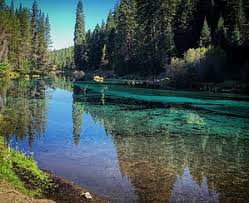
Here is the quiet advantage of Klamath County: land here still costs what Oregon land cost before the rest of the state found out about it — and with the salmon story unfolding, we do not expect that to last forever. A parcel here is a place to keep the drift boat, camp between river days, and eventually build the cabin.
Fair warning: Oregon land moves fast for us, and as this refresh went up we had exactly two Klamath County parcels left: 1.55 juniper-dotted acres in Chiloquin with power at the road — Chiloquin is the gateway to the Williamson — and 2.22 wooded acres in Bonanza with power available. Check our Oregon page for whatever is current, and if both are gone, the alert form below is exactly how you catch the next one. Every parcel comes with owner financing — here is exactly how that works — and if you are wondering whether buying land by email is legitimate, we wrote the honest answer to that too.
Get the next Klamath County parcel before it hits the site
One email when something new comes up. That is the whole list.
No spam, unsubscribe in one click. Prefer a human? Call or text Kristy at (720) 336-1232.