You did it. You bought your dream property — or you are about to — and now you want to get building. You need water, a septic system, and power. Now what?
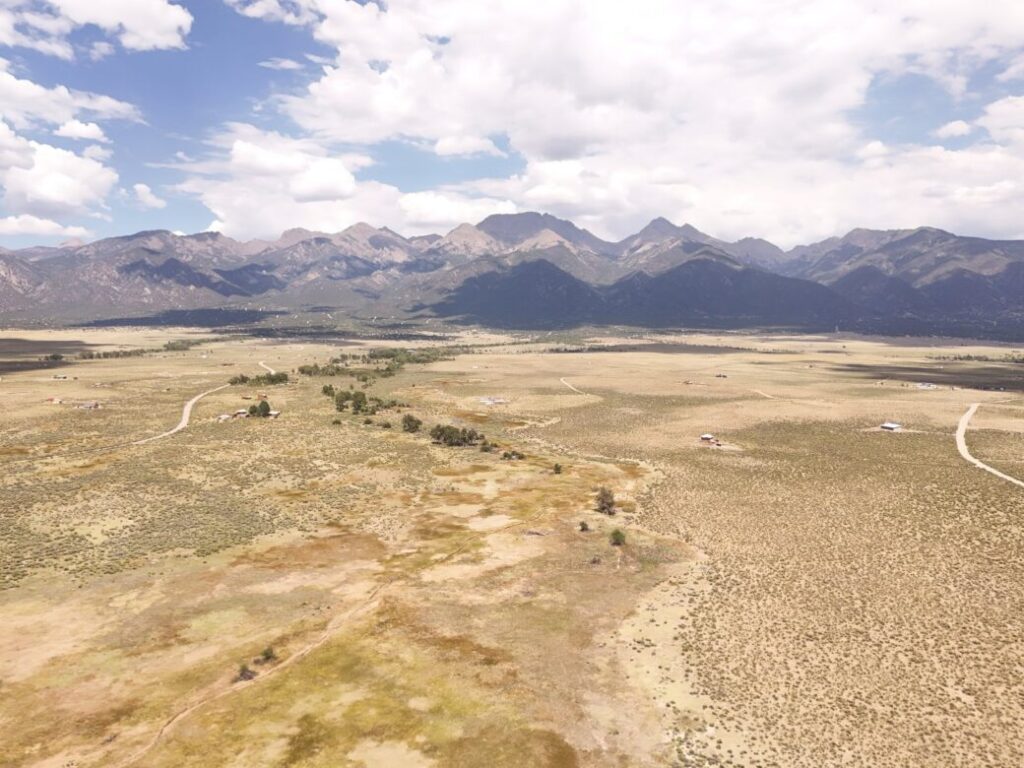
Most of the land we sell in Colorado is in Costilla County, so this guide focuses there, but nearly all of it applies across the San Luis Valley and rural Colorado generally. One thing to be clear about up front: almost none of this land comes with city hookups, and that is exactly why it costs a fraction of what a lot in town costs. The utilities are your project. Here is what that project actually looks like in 2026, with real numbers.
What is on this page
Start with what your lot allows
Before you price a single tank or panel, check two rules, because they decide your whole plan.
The one-acre well rule. On almost everything we sell in Costilla County, a well is not permitted on anything under one acre. If having water on your own land matters to you, buy at least an acre. Well permits come from the Colorado Division of Water Resources, and on rural lots like these they are generally issued for household use only — drinking, cooking, washing — not for irrigating a field. Larger parcels (35 acres and up) can qualify for broader domestic use.
The camping clock. The most common rule across these parcels is 14 days of camping out of every 3 months, and some subdivisions require a permit for anything longer. That matters here because a lot of buyers plan to camp on the land while they build. Check the rules for your specific subdivision before you plan on it.
Water: your three real options
Option 1 — drill a well
Wells here run anywhere from 80 feet to over 1,000 feet deep, with most landing in the 100–300 foot range. That spread is why quotes vary so much: Colorado drilling runs roughly $28–$65 per foot in 2026, and a typical complete well in the San Luis Valley — drilling, casing, pump, and pressure system — lands around $8,500–$15,500. A shallow well on a good day comes in under that; a deep hole with a long pump set costs more.
The good news is that groundwater quality in most of the valley is solid. Test your water anyway once the well is in — a few pockets of the San Luis Valley have naturally elevated arsenic, and a $30 test is cheap certainty.
Option 2 — cistern with hauled water
This is the most popular option in Costilla County, and honestly the most underrated. If the property is a weekend place, or you are a small household, hauled water is dramatically cheaper than drilling — and it works on lots where a well is not permitted at all.
The setup: a storage tank, a pump, and either a hauling trailer or a delivery service. A basic 1,000–1,500 gallon tank with a 12-volt pump runs on the order of $1,000–$2,000. A fully winterized system — buried tank, insulated pump house, heat-taped lines, sized for year-round living — is more like $4,000–$7,000 installed. Local fill stations around San Luis and Fort Garland sell water by the tank-load for a few cents a gallon, and haulers deliver 1,000–3,000 gallons at a time for a per-load fee plus mileage. Rates move around, so confirm current pricing with the hauler before you size your tank — and size the tank to the delivery minimum so you never pay for water you cannot store.
Option 3 — rain barrels (a supplement, not a supply)
Rain barrels are legal in Colorado — they have been since 2016, when the legislature finally carved out an exception to the state’s water-rights system. The allowance: two barrels, 110 gallons combined, filled from your roof, with sealed lids, and the water used outdoors on your own property. In a place that gets under 8 inches of rain a year, that is garden water, not household supply. Useful, free, and legal — just do not build your water plan around it.
Want land where the water question is already answered?
Tell us where to send them and we will email you when something new comes up in Costilla County — nothing else.
One email when something new comes up. No spam, and you can unsubscribe in one click. Prefer to talk? Call or text Kristy at (720) 336-1232.
Septic: the permit comes first now
If you plan to do anything beyond weekend camping, a waste system is not optional — and this is the area where the rules tightened most recently. Colorado updated its statewide septic regulations effective mid-2025, and every county has to meet or exceed them by mid-2026. The practical change for you: a soil evaluation is now the foundation of the design. Get the soil test done before you finalize where the house goes, not after.
On cost, set expectations honestly: the days of a $2,500 owner-built system are mostly gone. In 2026, a standard system on decent soil runs about $5,000–$15,000 installed in rural Colorado, plus a county permit that typically costs a few hundred dollars. Difficult soils or engineered systems push past that. Permits go through the county land use office, and an owner willing to do the excavation and pipe work can still shave real money off the total — just not the permit and the soil work.
Power: solar got cheap, batteries got good
This is the section that has changed the most since we first wrote this guide. Roughly half the households in unincorporated Costilla County live off-grid, and the economics of doing it keep getting better: panel prices have fallen for a decade, and lithium batteries have replaced the old lead-acid banks that needed babying. What used to be a lifestyle compromise is now just a normal way to power a house.
Realistic 2026 numbers, by ambition level:
- Weekend basecamp — a portable power station and a folding panel, or a small panel-plus-battery kit: $500–$2,000. Runs lights, phones, a fridge cooler, a fan.
- Dry cabin — 1–2 kW of panels with a lithium battery: $5,000–$10,000 if you install it yourself, roughly $12,000–$20,000 installed. Lights, fridge, water pump, electronics, some heat support.
- Full-time off-grid home — 3–5 kW of panels with 20+ kWh of battery: $25,000–$35,000, with big all-electric setups running well past $40,000. Pair it with a generator for the string of snowy days.
One 2026 budgeting note: the 30% federal residential solar tax credit is gone, so price systems at sticker, not net-of-credit like older articles assume.
Solar covers the electrons, but out here propane and wood do the heavy lifting. A 200–500 gallon propane tank handles cooking and heat, with several reliable regional co-ops delivering on a route (Monte Vista Cooperative is a longtime local choice). Most full-timers run a wood stove as primary heat — winters at 8,000 feet are serious, and wood is cheap and local.
And if a listing says power at the road — some of ours do — treat that as an option worth pricing, not a given. A short tap from an adjacent line can be reasonable; a long extension gets expensive fast. The San Luis Valley’s rural electric co-op will give you a written quote for your exact lot, and that quote is worth getting before you buy if grid power is a must-have for you.
What a full setup really adds up to
| How you will use it | Water | Waste | Power | All-in ballpark |
|---|---|---|---|---|
| Weekend basecamp | Bring it / rain barrels | Portable | Power station + panel | $1K–$3K |
| Dry cabin, part-time | Cistern + hauled water | Standard septic | Small solar + battery | $12K–$25K |
| Full-time off-grid home | Drilled well | Standard septic | 3–5 kW solar + battery + propane | $40K–$65K |
These are 2026 planning ranges from published Colorado cost data, not quotes — your dirt, your depth to water, and your distance from town all move the number. Get three bids for anything involving a drill rig or an excavator, and confirm current hauling and propane rates locally. When you buy from us, ask — we are happy to tell you what setups previous buyers in the same subdivision actually built.
What does your budget buy?
Here is the part that surprises people: the land itself is usually the cheapest line in this whole project. Most of our Colorado parcels carry payments between $69 and $399 a month with owner financing (here is exactly how our financing works, including the rate). Slide your monthly budget below and see what is on the books right now.
What can I afford?
Owner financed — no credit check, no qualifying, no prepayment penalty.
| Pay it off in | Rate | Property price |
|---|
An estimate, not an offer. Your rate depends on the term you choose: 1 year 0%, 2 years 8%, 3–4 years 10%, 5 years or longer 12%. Every monthly payment also carries the property-tax escrow (most of our parcels run $5–$25 a month), a $15/month note servicing fee, and any HOA or POA dues on that property. The document fee is due with your down payment and is not financed.
A few current Colorado listings where part of the utility question is already solved: a 1.12-acre lot in Lazy KV Estates with power and water at the gravel road, a rare corner lot in Forbes Park with power and great road access, and a flat 1.25-acre residential lot in Moffat with power nearby and established neighbors if you would rather start with the utility question half-answered. Or browse everything we have in Colorado — and if you are new to buying land this way, start with the honest answer to “is this a scam?”
Get the next Colorado parcel before it hits the site
One email when something new comes up in Costilla County. That is the whole list.
No spam, unsubscribe in one click. Prefer a human? Call or text Kristy at (720) 336-1232 — she can tell you which lots already have water or power figured out.